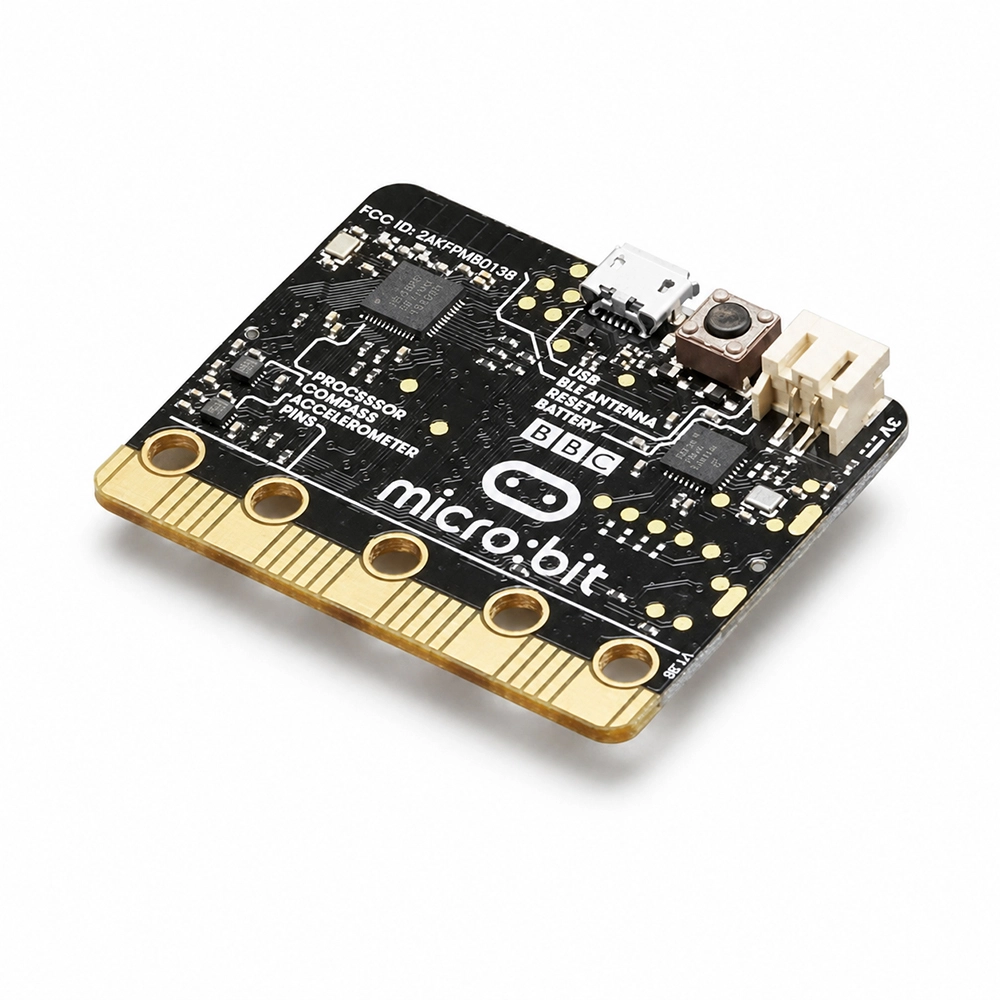
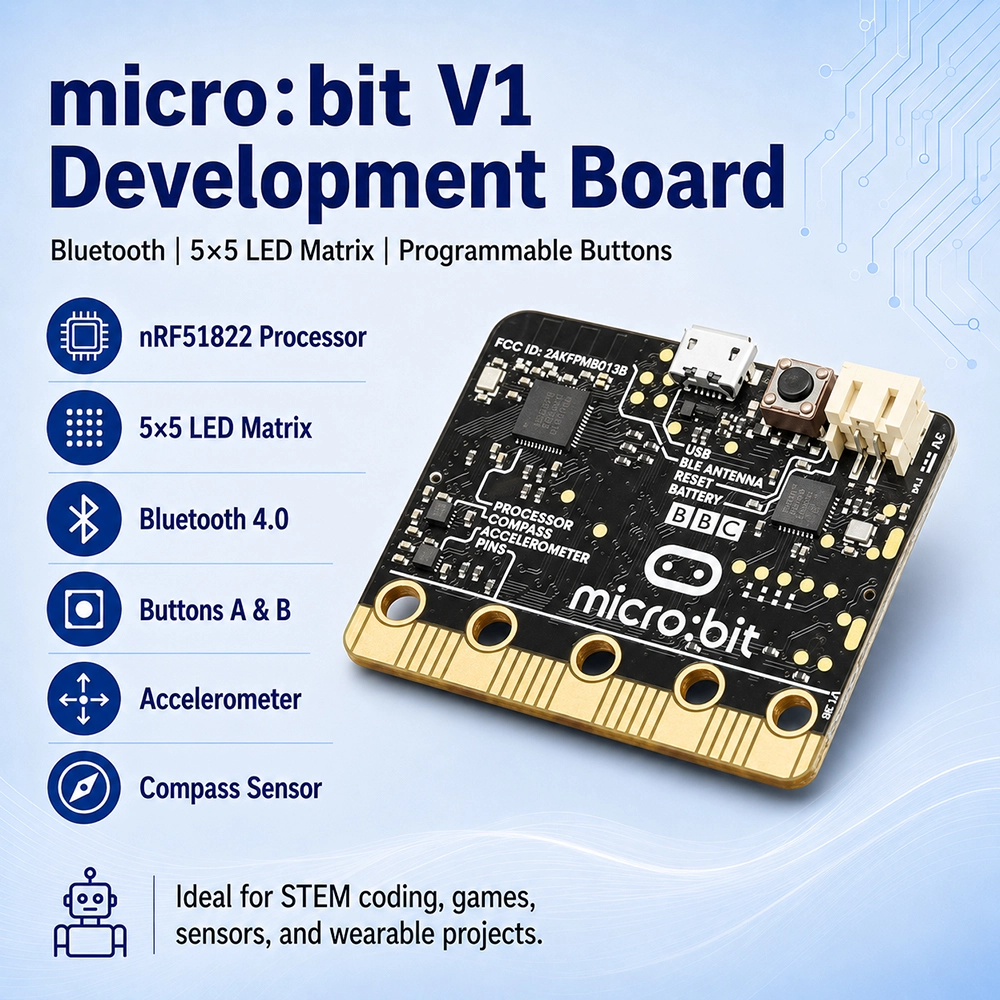
The micro:bit V1 is a pocket-sized micro-computer designed by the BBC. Half the size of a credit card, this powerful ARM-based board is packed with integrated sensors, including a 3-axis accelerometer, magnetometer (compass), and Bluetooth 4.0 connectivity. Whether you are building a wireless robot, a digital musical instrument, or a wearable fitness tracker, the micro:bit provides an intuitive entry point into the world of hardware and software interaction. Supporting multiple platforms like MakeCode (Graphical), Python, and JavaScript, it is the most versatile tool for classrooms and young makers worldwide.
Technical Specifications
| Parameter | Specification |
| Product Name | BBC micro V1 Development Board |
| Main Processor | nRF51822 |
| Processor Core | 16MHz 32-bit ARM Cortex-M0 |
| Wireless Communication | Bluetooth 4.0 Low Energy / 2.4GHz RF |
| RAM | 16KB |
| Flash Memory | 256KB |
| Interface MCU | KL26Z |
| Interface MCU Core | 48MHz ARM Cortex-M0+ |
| Interface MCU Flash | 128KB |
| Magnetometer | MAG3110 |
| Magnetometer Interface | I2C |
| Magnetometer Function | 3-axis geomagnetic data detection |
| Accelerometer | MMA8652 |
| Accelerometer Interface | I2C |
| Accelerometer Function | 3-axis acceleration data detection |
| Power Interface | 3V power interface |
| USB Interface | Micro USB |
| USB Function | Programming, debugging and serial communication |
| Battery Support | Supports external battery box |
| Reset Button | Yes |
| LED Matrix | 5×5 monochrome LED matrix |
| LED Display Function | Displays text, icons and graphics |
| Programmable Buttons | Button A and Button B |
| I/O Expansion Interface | Edge connector pins |
| Supported Interfaces | SPI, UART, I2C, AD and PWM |
| Expansion Pins | 20+5 pin edge connector |
| Programming Methods | Graphical programming, Python and JavaScript |
| Online Programming | Supported |
| Approximate Size | 4cm × 5cm |
| Suitable Users | Students, beginners, teachers and makers |
Projects You Can Build
LED Icon Display: Use the 5×5 LED matrix to display icons, text, numbers, and simple animations. This project helps beginners learn output control and basic programming logic.
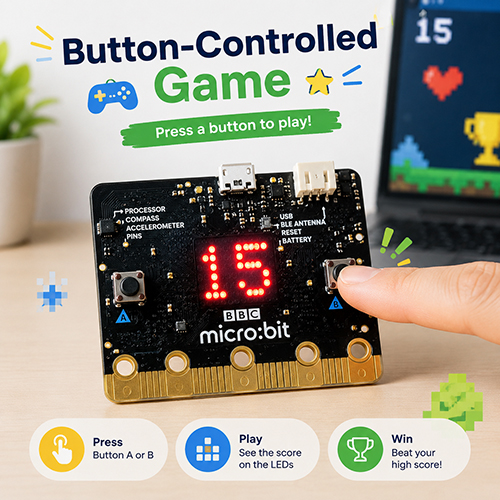
Button-Controlled Game: Use the A and B buttons to create a simple reaction game, score counter, or selection menu. This project introduces input control and interactive programming.
Motion Detection Project: Use the accelerometer to detect shaking, tilting, or movement. It is suitable for making step counters, gesture controls, or motion-triggered devices.
Compass Direction Project: Use the onboard magnetometer to detect direction and create a simple digital compass or navigation experiment.
Why Choose Us
Built on a foundation of twenty years of industrial manufacturing excellence, our factory stands as a premier provider of high-quality STEM education hardware. We specialize in delivering a comprehensive ecosystem of educational tools, spanning an extensive range of categories including development boards, expansion shields, sensors, specialized accessories, and complete project kits.