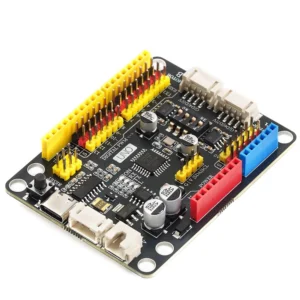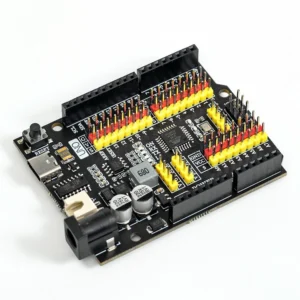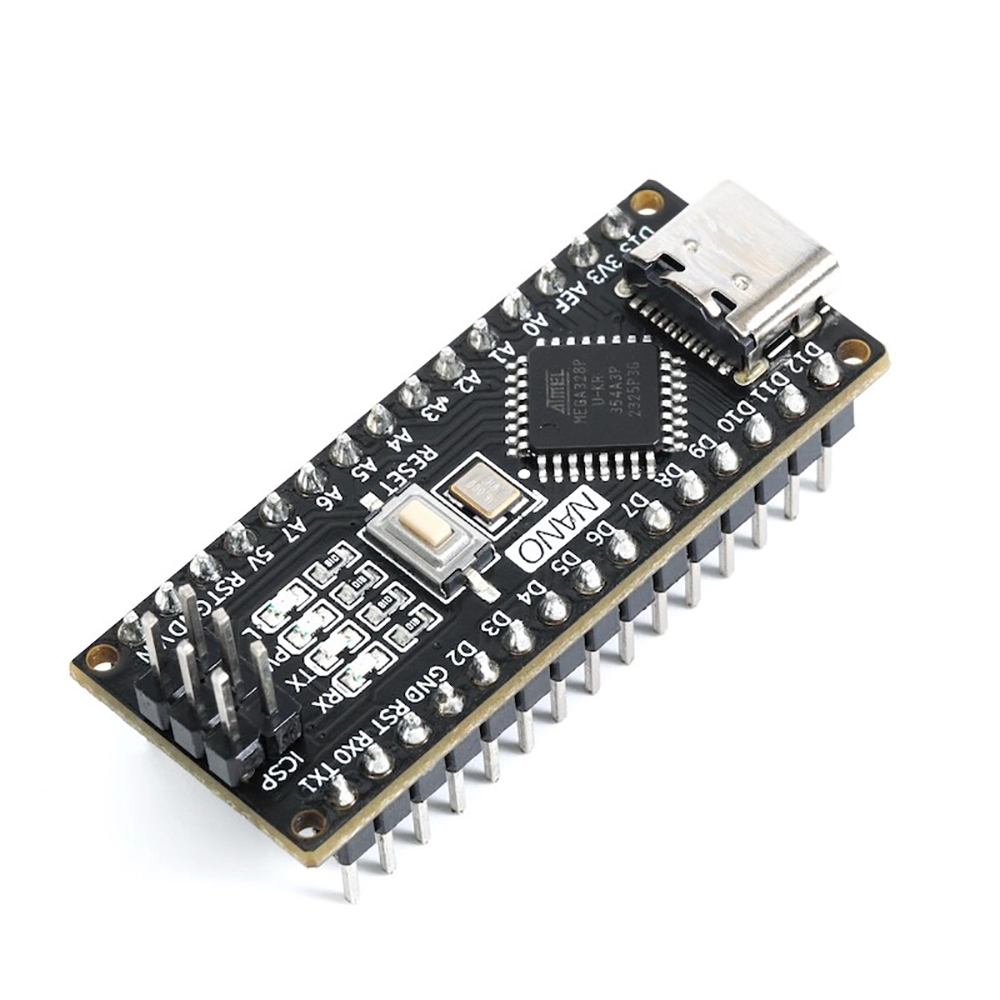
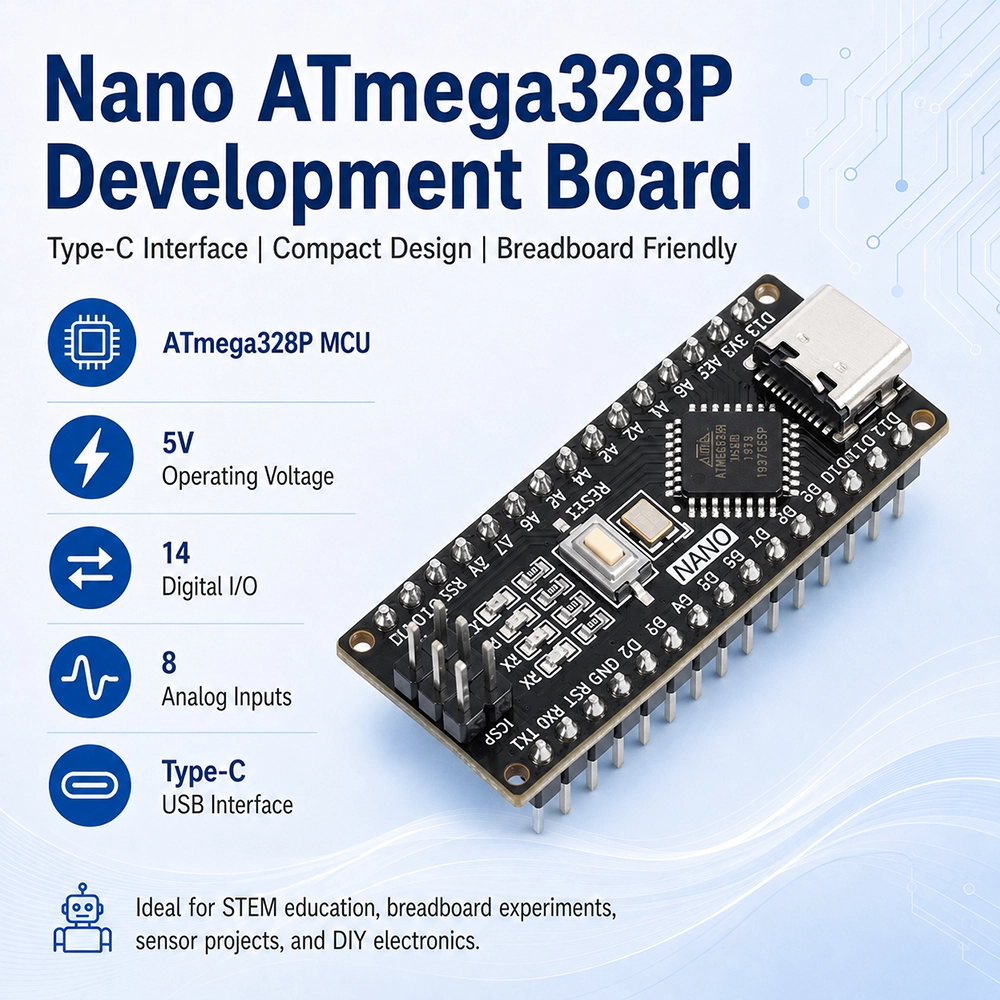
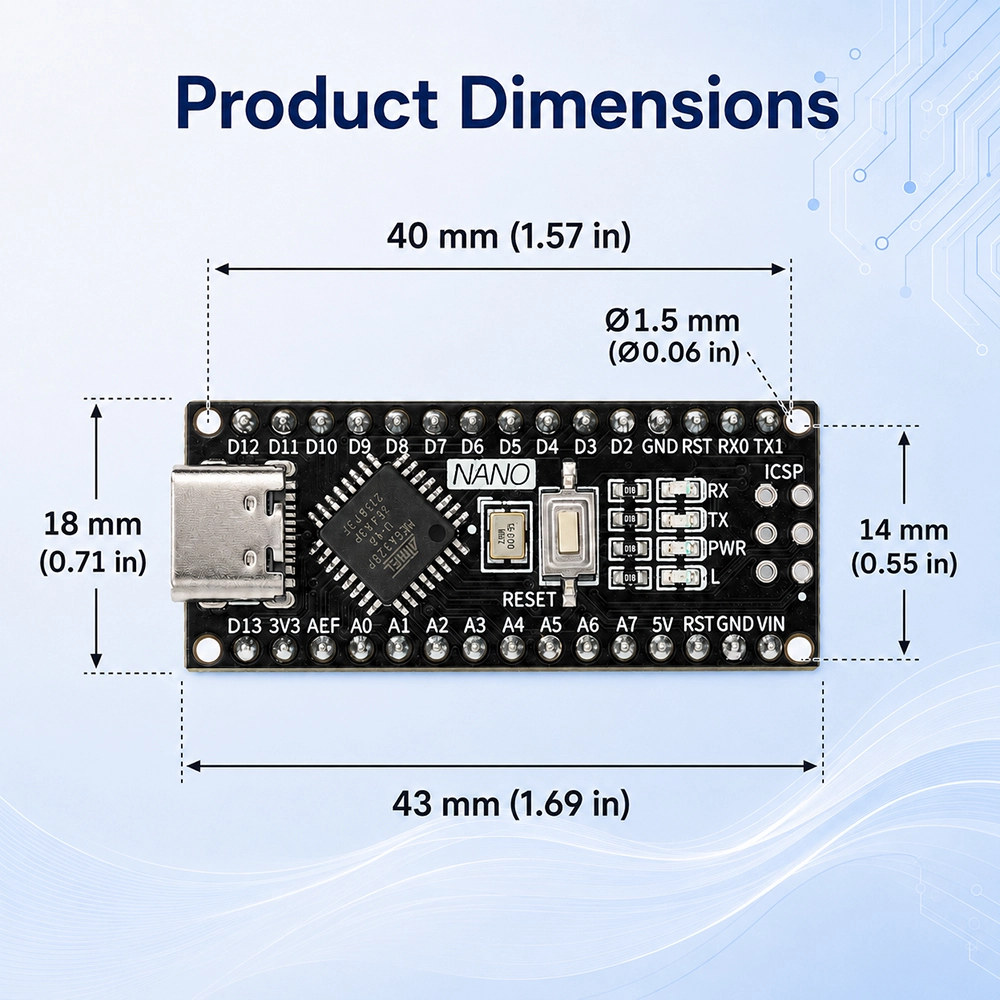
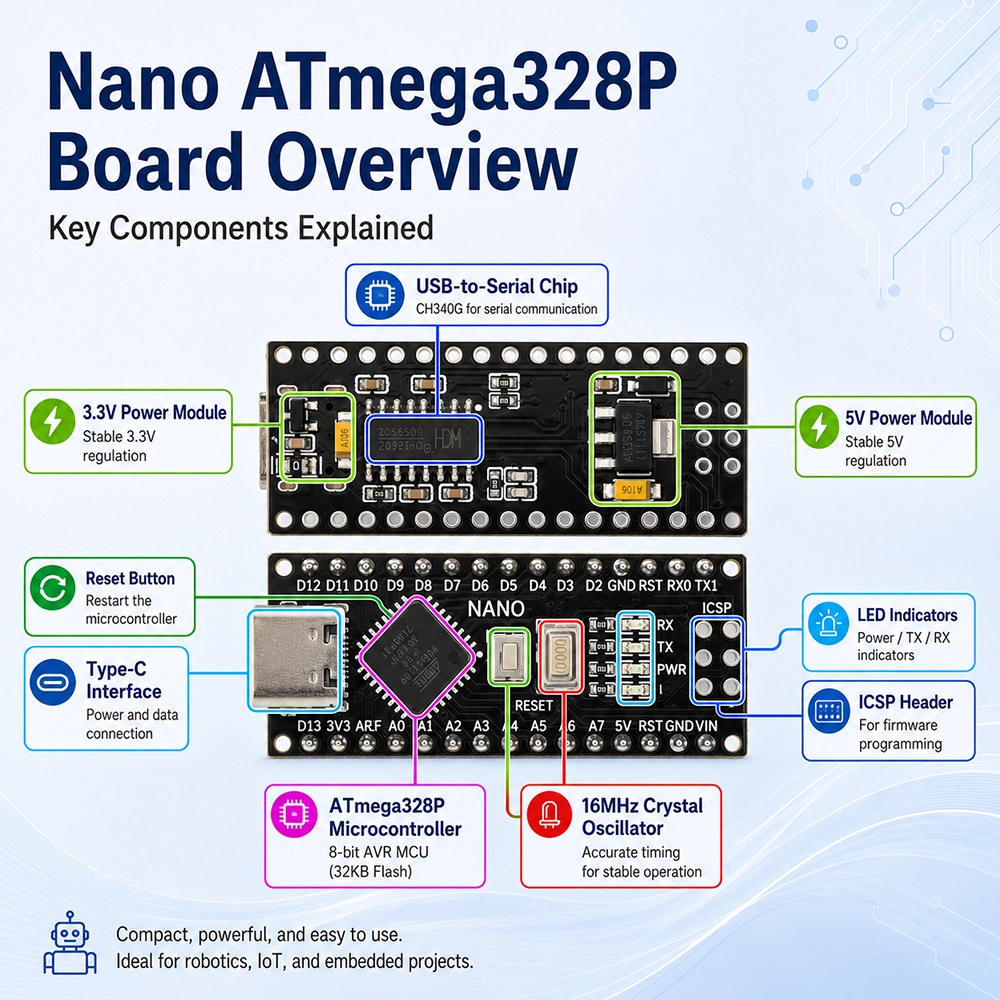
The Enhanced Nano Development Board is a high-performance, ultra-compact microcontroller based on the ATmega328P (16MHz). While retaining the classic breadboard-friendly footprint, this hardware revision introduces two critical upgrades: it replaces the legacy Mini-USB with a modern Type-C interface and boosts the 5V power output to a robust 5V/2A (10W). This solves the traditional “weak power” bottleneck, allowing the board to drive high-load peripherals like servos and LED matrices directly without external power modules.
Technical Specifications
| Parameter | Specification |
| Product Name | Nano ATmega328P Type-C Development Board |
| Microcontroller | ATmega328P |
| Operating Voltage | 5V |
| Recommended Input Voltage | 6–9V DC |
| Digital I/O Pins | 14 |
| PWM Output Pins | 6 |
| PWM Pins | D3, D5, D6, D9, D10, D11 |
| Analog Input Pins | 8 |
| Analog Pins | A0–A7 |
| DC Current per I/O Pin | 20mA |
| Flash Memory | 32KB, including 0.5KB used by bootloader |
| SRAM | 2KB |
| EEPROM | 1KB |
| Clock Speed | 16MHz |
| Onboard LED | D13 |
| Communication Interface | Type-C |
| Recommended Use | STEM education, breadboard experiments, sensor projects, DIY electronics, robotics learning |
Projects You Can Build
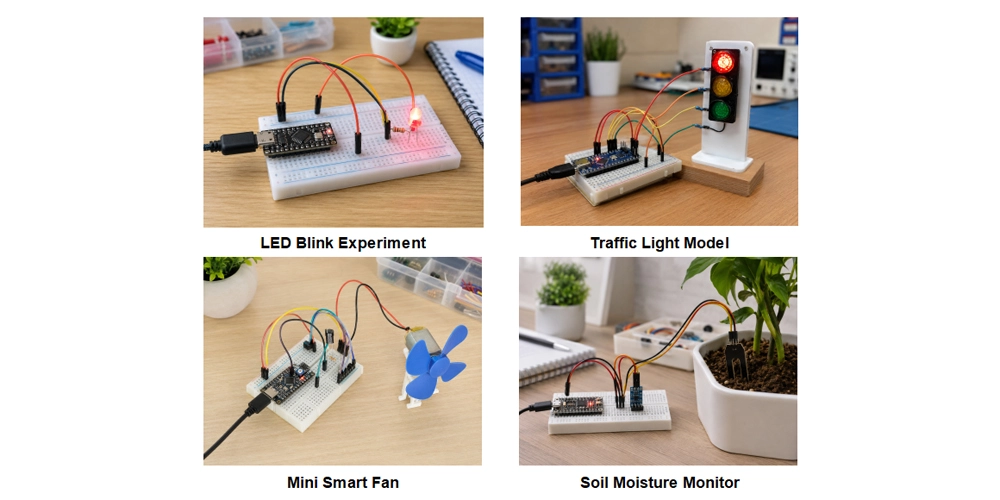
- LED Blink Experiment: Use a digital output pin to turn an LED on and off. This is a basic beginner project for learning output control and program logic.
- Traffic Light Model: Use red, yellow, and green LEDs to simulate a traffic light system. This project helps students understand timing control and sequence programming.
- Mini Weather Station: Use temperature, humidity, and light sensors to collect environmental data. The data can be shown on a small display module.
- Mini Smart Fan: Use a temperature sensor and an external motor driver to control a small fan based on temperature changes.
Why Choose Us
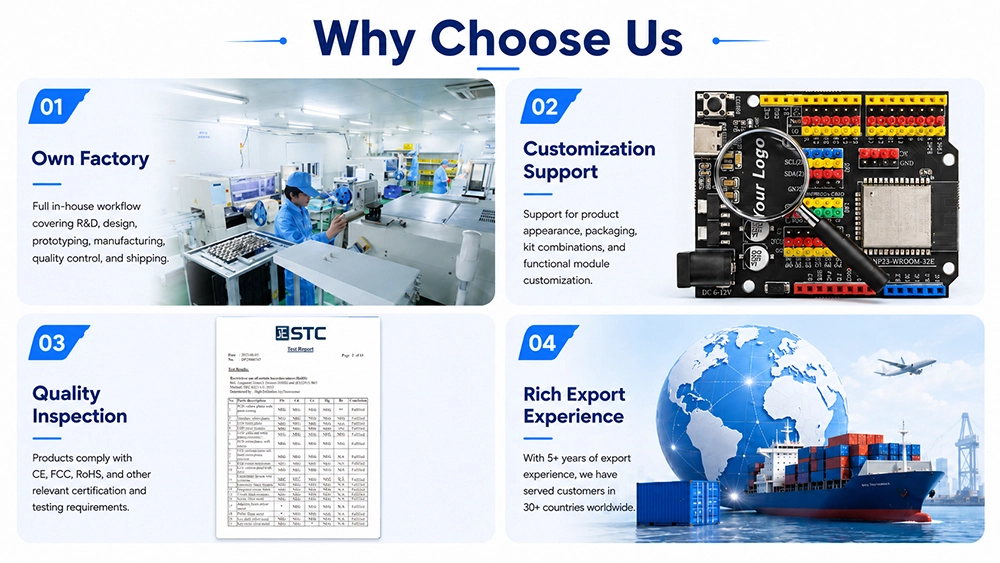
We provide reliable factory-direct supply for STEM education hardware, IoT development boards, robotics kits, and electronic modules. From product assembly to quality inspection, we focus on stable performance and consistent delivery for schools, distributors, and project-based learning programs.