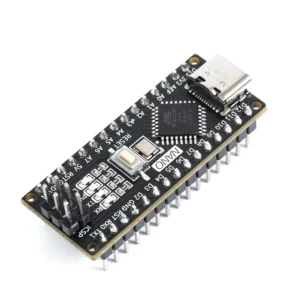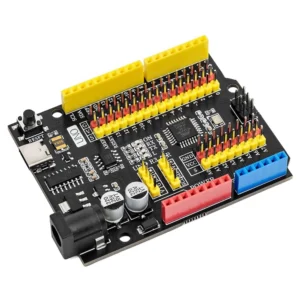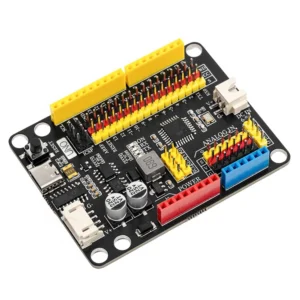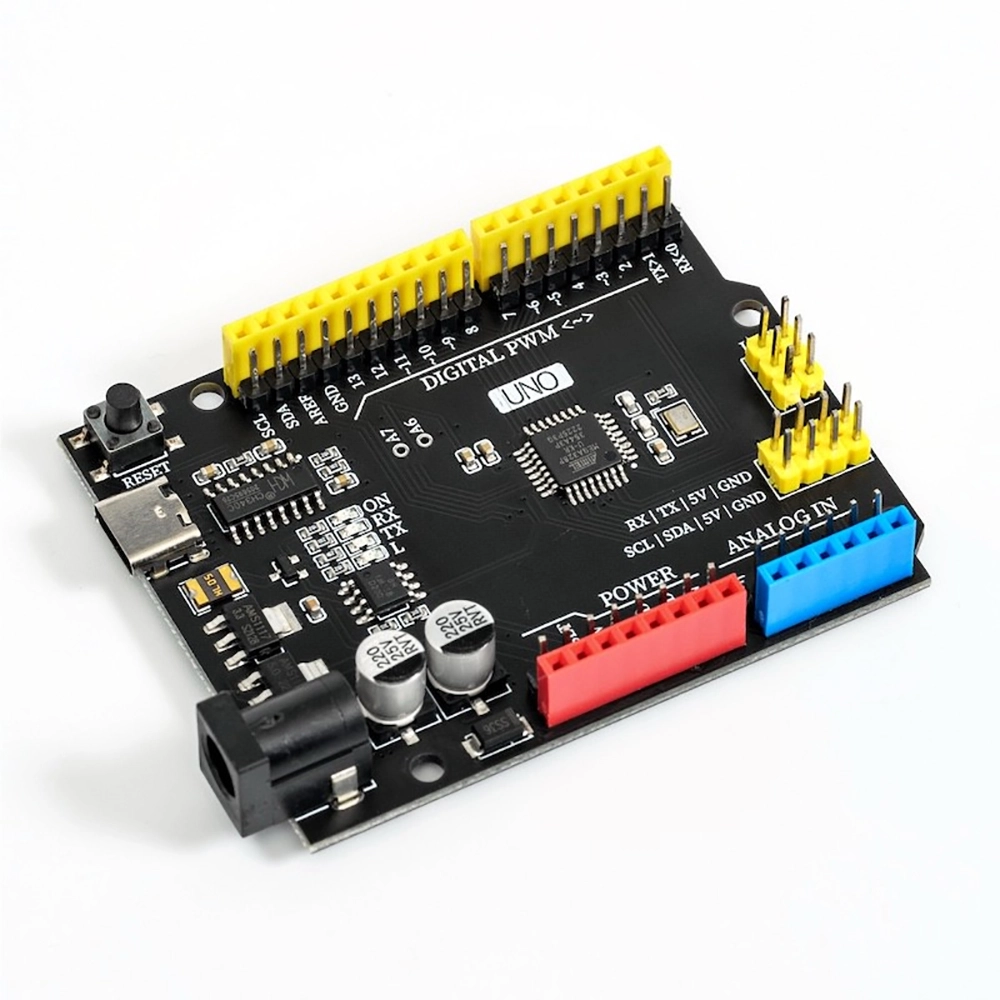
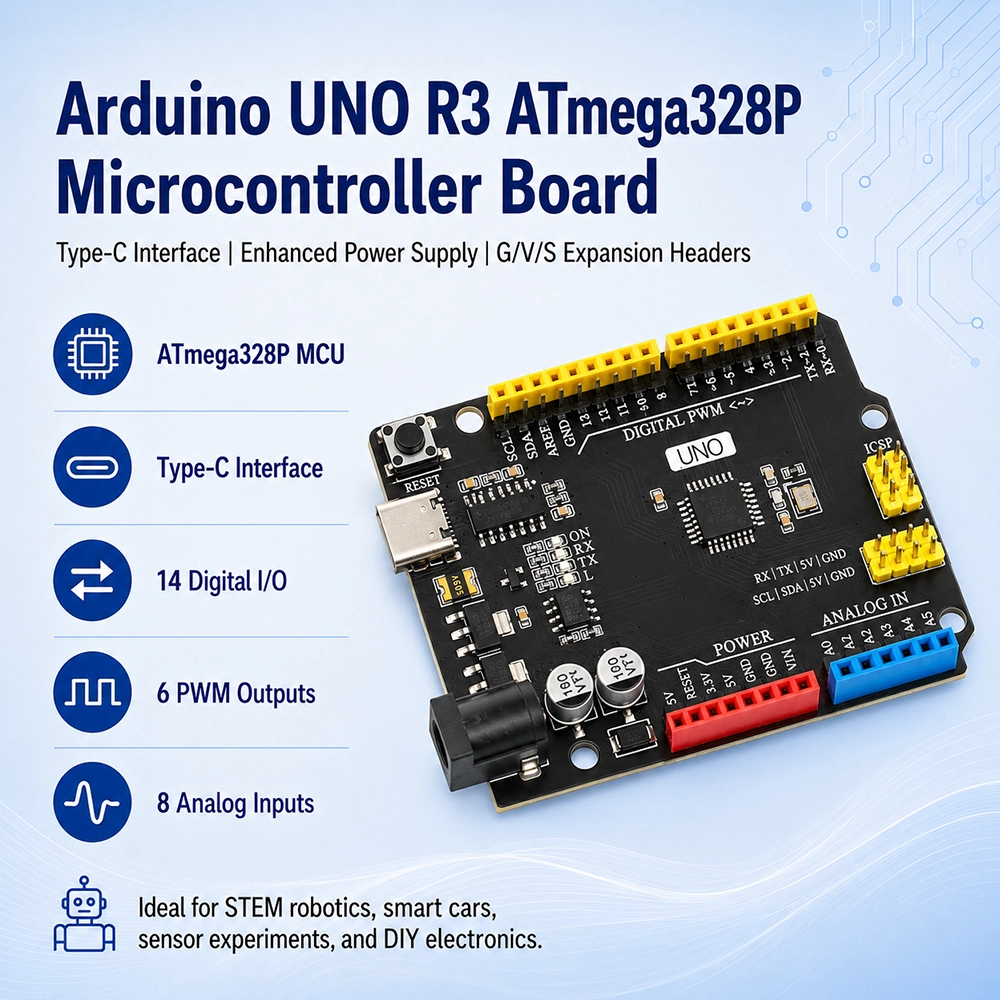
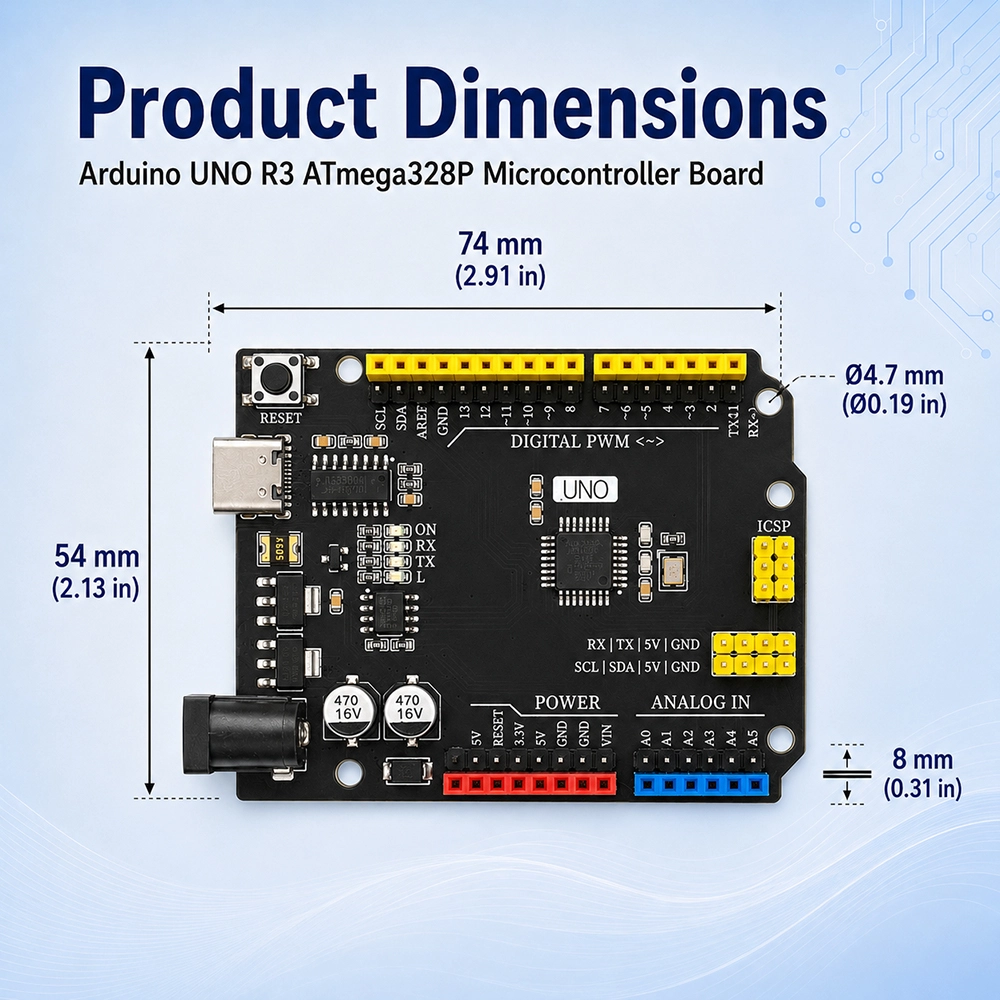
The UNO R3 is a powerful upgrade to the classic Arduino UNO Rev3. While maintaining 100% software compatibility, this hardware revision addresses the core limitations of the original design. It replaces the legacy Type-B port with a modern USB Type-C connector and integrates a high-efficiency 5V/2A (10W) power module, allowing it to drive multiple servos, motors, and sensors directly without an external expansion shield. With added G|V|S headers and extra analog pins (A6/A7), it is the most capable and user-friendly board for STEM education, professional prototyping, and complex robotics.
Technical Specifications
| Parameter | Specification |
| Product Name | UNO R3 PRO ATmega328P Type-C Development Board |
| Microcontroller | ATmega328P-PU |
| Compatibility | Arduino UNO Rev3-compatible |
| Operating Voltage | 5V |
| Recommended Input Voltage | 7–12V DC |
| Digital I/O Pins | 14 |
| PWM Output Pins | 6 |
| PWM Pins | D3, D5, D6, D9, D10, D11 |
| Analog Input Pins | 8 |
| Analog Pins | A0–A7 |
| DC Current per I/O Pin | 20mA |
| 5V DC Power Output | Up to 2000mA according to the product document |
| Flash Memory | 32KB, including 0.5KB used by bootloader |
| SRAM | 2KB |
| EEPROM | 1KB |
| Clock Speed | 16MHz |
| Onboard LED | D13 |
| Communication Interface | USB Type-C |
| Power Interface | DC power jack, USB Type-C, lithium battery connector |
| Programming Header | ICSP header |
| Expansion Interface | G/V/S headers, digital I/O, analog input, I2C-related header |
| Protection Design | Resettable fuse, power switching protection |
| Recommended Use | STEM education, programming learning, sensor projects, robotics, smart cars, DIY electronics |
Projects You Can Build
The Arduino UNO R3 board is based on the ATmega328P-PU microcontroller and is compatible with Arduino UNO R3. It is suitable for beginner programming, sensor data collection, servo and motor control, display interaction, robotics experiments, and other electronic projects.
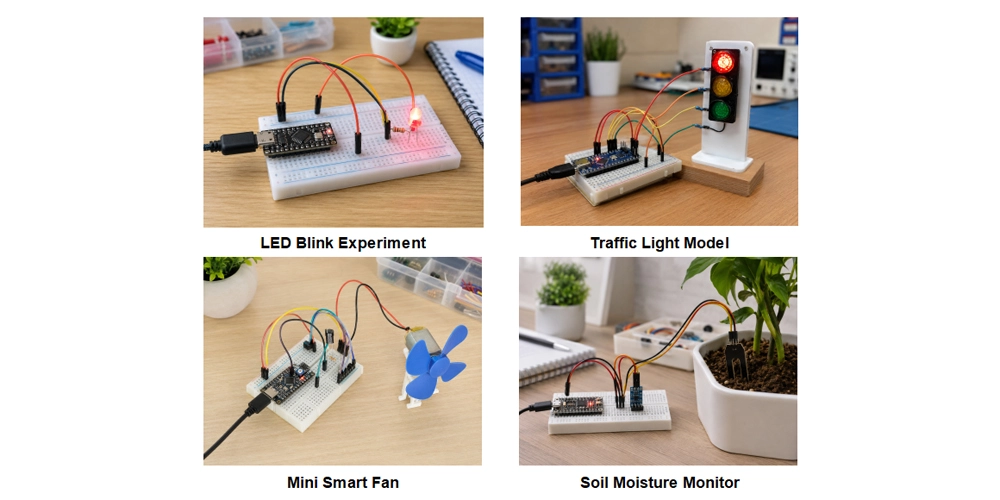
Project examples include:
Onboard LED Blink Experiment: Control the onboard D13 LED to turn on and off at regular intervals, helping beginners learn program uploading, digital output, and delay control.
External LED Blink Experiment: Use a digital I/O pin to control an external LED, allowing users to understand basic circuit connection and digital output control.
LED Running Light Experiment: Control multiple LEDs to light up in sequence, helping users learn multi-channel digital output control.
LED Breathing Light Experiment: Use PWM output to create a smooth fade-in and fade-out LED effect, helping users understand pulse-width modulation and brightness control.
Why Choose Us
What truly sets us apart for wholesale buyers is our limitless capacity for customization. Whether you require a unique PCB color to match your brand’s aesthetic, a specialized sensor interface like our PH2.0 STEM or the traditional 2.54mm DIY series, or a completely bespoke starter kit designed for a specific national curriculum, our engineering team has the expertise to deliver.